Why Restaurant Lighting Changes What a Tall Woman Should Wear
Quick Answer: Restaurant lighting is usually overhead, warm, and low, which exaggerates vertical shadow and flattens colour. On a taller frame the light source sits relatively closer to the head and further from the hem, so the top half is lit and the bottom half falls into shadow. Choose fabrics with some sheen or texture below the waist and keep detail and contrast up near the face.
The outfit looked balanced in the bedroom. In the restaurant you caught a photo afterwards and it read as top-heavy, with everything below the waist disappearing into a dark mass.
The outfit did not change. The light did, and the way it fell on you is specific to how tall you are.
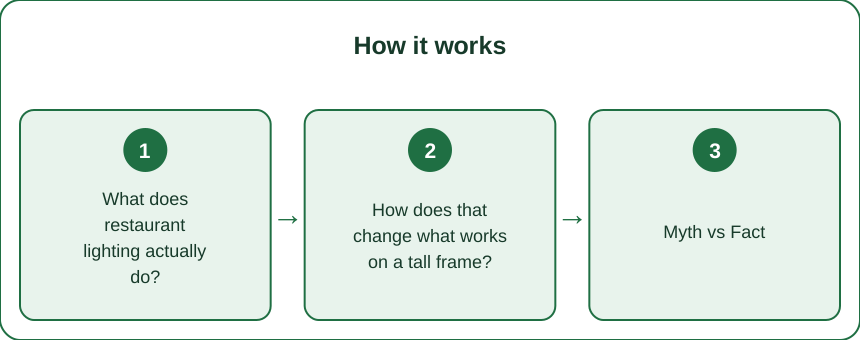
What does restaurant lighting actually do?
Three things, and all three interact with height.
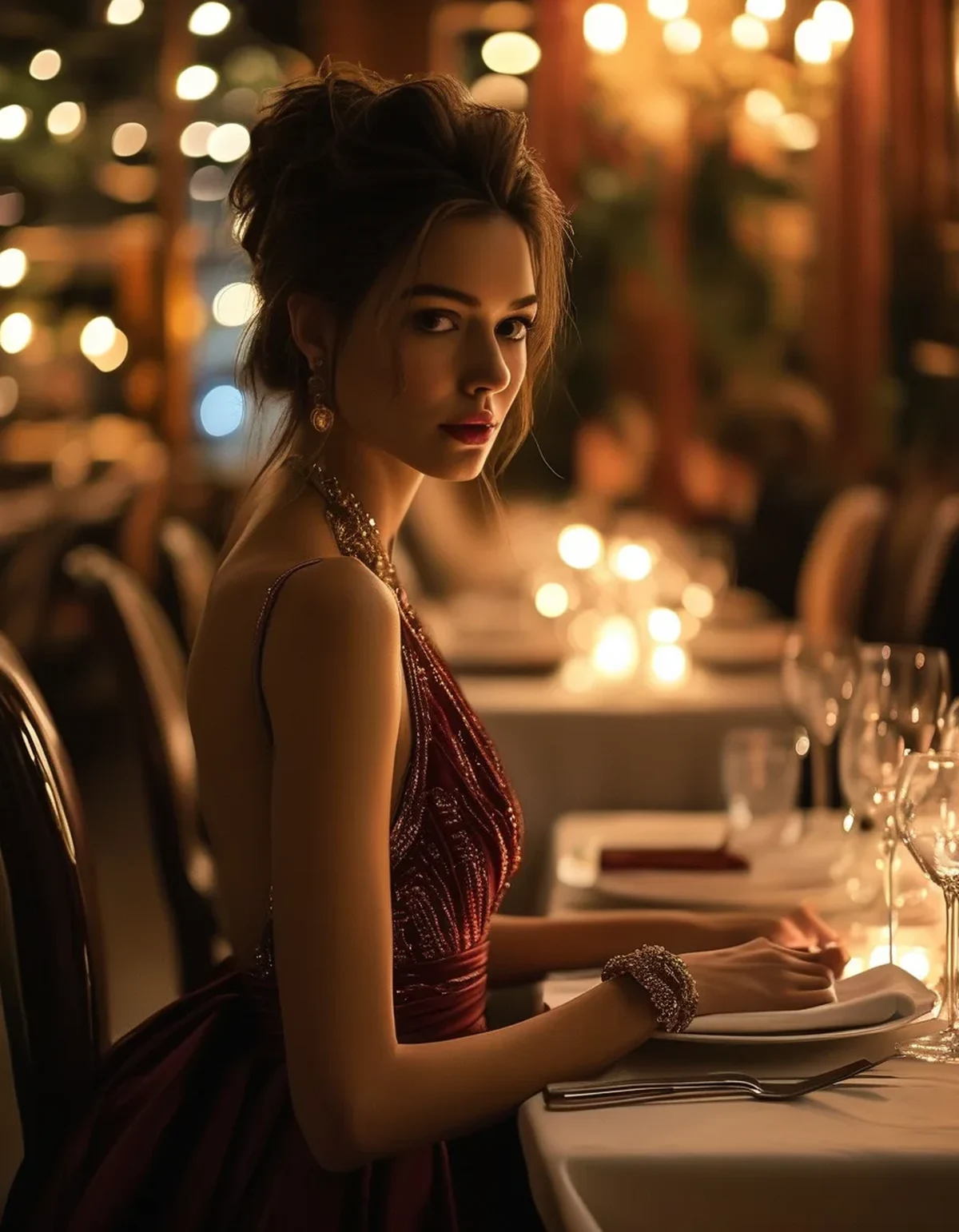
It comes from above and it is close. Pendant lights, downlights, and candles all sit above head height and relatively near. Light falls off sharply with distance, so the top of you is lit considerably more brightly than the bottom.
On a shorter frame the difference between the lit zone and the shadowed zone is smaller in absolute terms. On a taller frame there is more distance between your face and your hem, so the gradient is steeper and the lower half genuinely receives less light.
It is warm. Restaurant lighting typically sits in the 2200 to 2700 kelvin range, which is far warmer than daylight. That shifts colour perception substantially: blues go grey, cool pinks turn muddy, and warm tones - camel, rust, gold, warm reds - come alive. An outfit chosen in daylight for its colour relationship can lose that relationship entirely at the table.
It is dim. Low light reduces perceived contrast and detail. Fine texture disappears, subtle pattern reads as flat, and dark colours merge into each other. A navy skirt and a black top look like one dark shape, which is precisely the effect people are trying to avoid.
Combine the three and the pattern is predictable: bright, warm, detailed at the top, and dim, flat, undifferentiated at the bottom.
How does that change what works on a tall frame?
It reverses one of the standard pieces of advice.
The usual guidance for tall women is to break up length, add horizontal interest, and avoid stacking too much detail near the face. That is sound in daylight.
In low warm overhead lighting, the bottom half is already being visually removed by the shadow, so breaking up length is happening whether you plan it or not, and it happens in the wrong place - at the light line rather than at a deliberate one.
The useful move is to give the lower half something to catch the light with. Fabrics with a slight sheen - satin, silk, a fine wool with lustre, leather - reflect the small amount of light that reaches them and keep the lower half present. Matte heavy fabrics in dark colours vanish.
Texture does the same job. A pleat, a rib, a heavier weave, or a subtle drape creates its own highlights and shadows, which reads as form rather than as an absence.
And the second move is to control where the break happens. If the light is going to create a horizontal division around your midsection, put a deliberate one there - a belt, a waist seam, a colour change - so the division reads as design rather than as the room deciding for you.
Myth vs Fact: Dressing for Evening Light
Myth: Black is always safe for evening. Fact: Black is safe for shape and unhelpful for presence in dim light. An all-black outfit in a dark restaurant reduces you to a face and hands. If you love black, put the sheen or the texture into it - a satin trouser, a leather skirt, a ribbed knit - rather than a flat matte version.
Myth: Check the outfit in your bathroom mirror. Fact: Bathroom lighting is bright, cool, and often front-on - close to the opposite of a restaurant. A hallway lamp or a single warm side light is a far better preview.
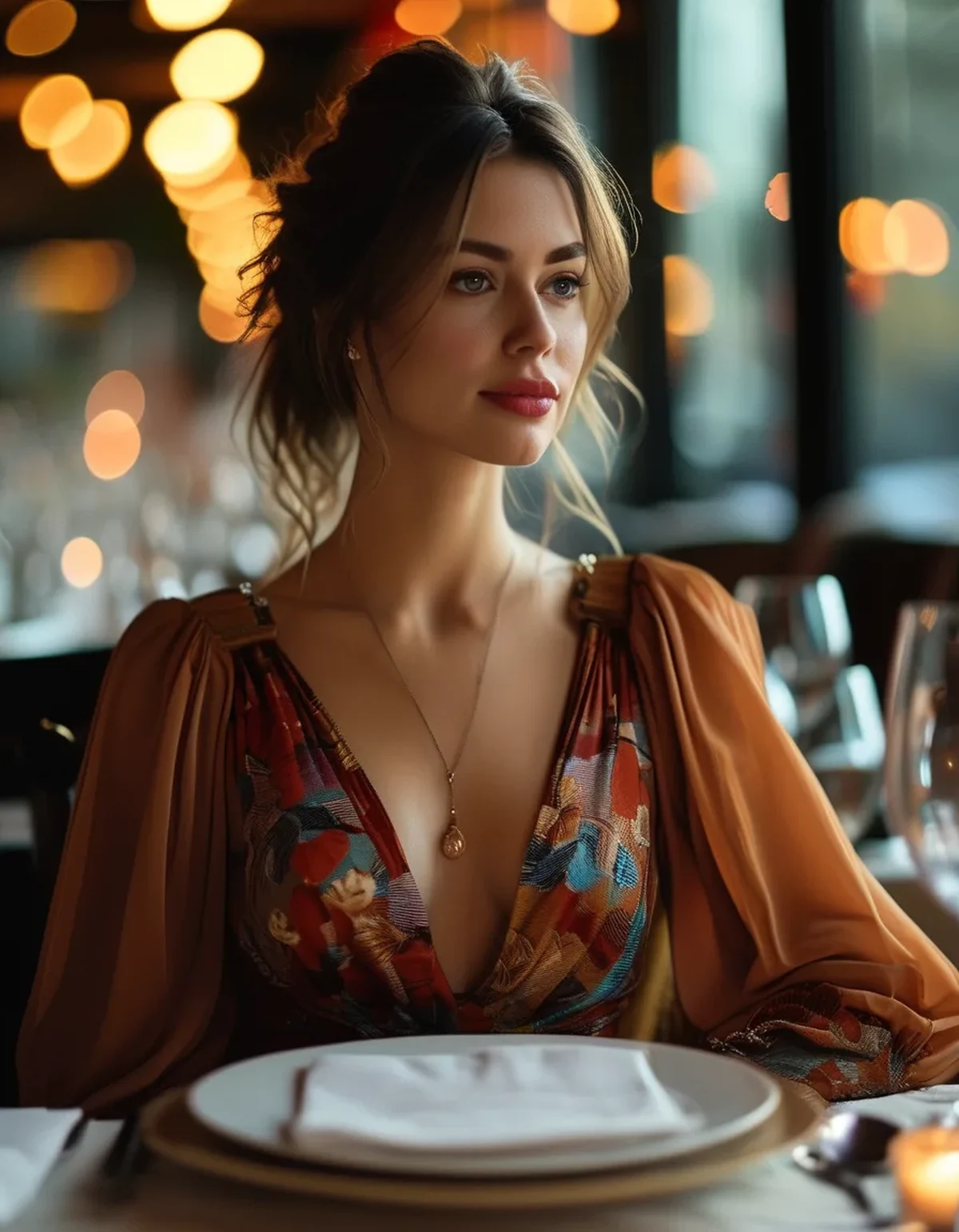
Myth: Metallics are too much for dinner. Fact: A small amount of metallic near the face is the single most effective thing in low light, because it catches and returns what little there is. Earrings do more work in a restaurant than any other accessory.
Myth: Tall women should not wear heels to dinner. Fact: In a seated setting for most of the evening, heel height matters far less than usual, and the shoe is barely visible. Dinner is the occasion where the heel decision can be made purely on comfort and on the walk in.
Myth: Pattern gets lost in low light so it is a waste. Fact: Large-scale pattern reads perfectly well. Small-scale pattern turns to texture, which is often a good outcome. It is only fine detail that genuinely disappears, so scale up rather than avoid.
What should you actually do before you leave?
Two minutes of checking and a few reliable choices.
Preview in the light you are going into. Turn off the overhead, switch on one warm lamp, and look at the outfit in that. Everything problematic shows up immediately, and it takes thirty seconds.
Put sheen or texture below the waist. Satin, leather, a lustrous wool, a pleat, or a rib. This is the single most effective adjustment and it directly addresses the lighting gradient a tall frame creates.
Keep contrast and detail near the face. A collar, a neckline, earrings, or a lighter colour at the top. This is where the light is, so this is where visual information registers.
Choose warm-leaning colours or accept that cool ones will read differently. Camel, rust, burgundy, olive, cream, and warm red all behave beautifully under restaurant lighting, which conveniently is the whole autumn palette.
Make the horizontal break deliberate. A belt, a waistband, or a colour change somewhere you chose, rather than leaving it to where the light happens to stop.
Think about seated proportions. You will be seen sitting for most of the evening, which means the top half, the sleeves, and the neckline are doing nearly all the work, and hemlines matter far less than they do standing. Checking an outfit sitting down is worth more than checking it standing up, and almost nobody does it.
And consider the walk in. Autumn means a coat, and the coat is what people see first and last. A coat that works over the outfit is not an afterthought at this time of year - it is half of what gets seen.
FAQ: Evening Light and Tall Style, Answered
What if the restaurant is brightly lit?
Then the daylight rules apply again - matte fabrics work, fine detail reads, and cool colours behave normally. It is worth a quick look at the venue’s photos online, which tells you the lighting immediately and takes less time than changing outfits.
Do these rules apply to bars and events too?
Bars are usually darker and often have more coloured light, which pushes the same advice further - more sheen, more contrast near the face, larger scale. Event lighting varies too much to generalise, though the seated-versus-standing question flips completely for a standing event.
Is there a colour that works in every light?
Cream, camel, and warm mid-tones are the most reliable across daylight and warm low light, because they carry enough lightness to stay visible and enough warmth not to shift oddly. Deep cool colours are the ones that change most between the fitting room and the table.
TL;DR:
- Restaurant light is overhead, warm, and dim, which lights your top half and drops your lower half into shadow - a steeper gradient on a taller frame.
- Put sheen or texture below the waist so the lower half catches what light reaches it, and keep contrast and detail near the face.
- Warm-leaning autumn colours behave beautifully; cool blues and pinks shift the most.
- Preview the outfit under one warm lamp, check it sitting down, and remember the coat is half of what gets seen.
The outfit that failed at dinner was probably fine. It was lit from a source your height put a long way from your hem, and a fabric with a bit of sheen solves most of it.
Keep Reading
This article is for general informational and styling purposes only. Fit, sizing, and product availability may vary.