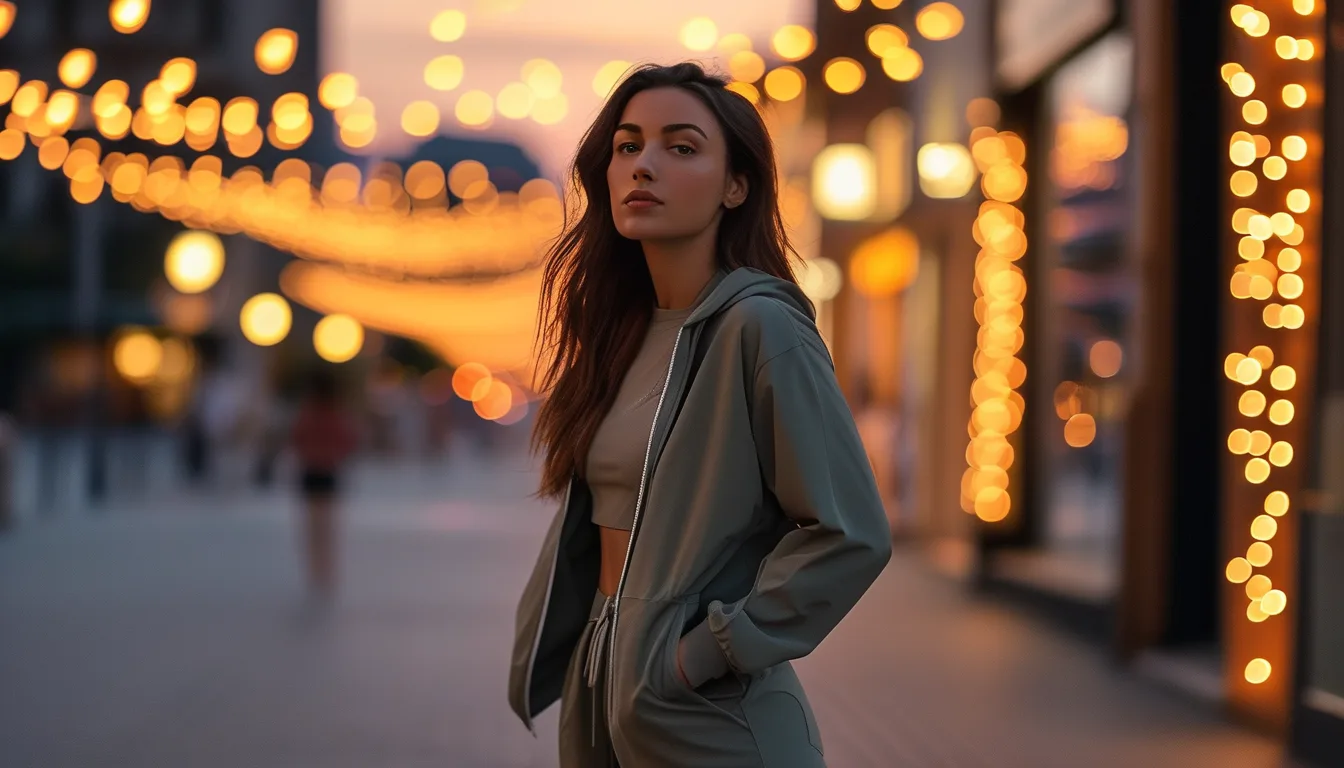
The Tall Date Night Layering Formula That Doesn't Add Bulk to Your Frame
Quick Answer: Cold-weather layering for a taller frame works best with fewer, more structured layers rather than many thin ones, since excess bulk reads more visually on a longer frame and proportionally shortens the appearance of legs — a fitted base layer, one structured mid layer, and a longer coat keep warmth without adding visual weight.
The general cold-weather layering advice (three thin layers) doesn’t always translate well to a taller frame, where added bulk shows up differently and can throw off proportions that already take more care to balance.
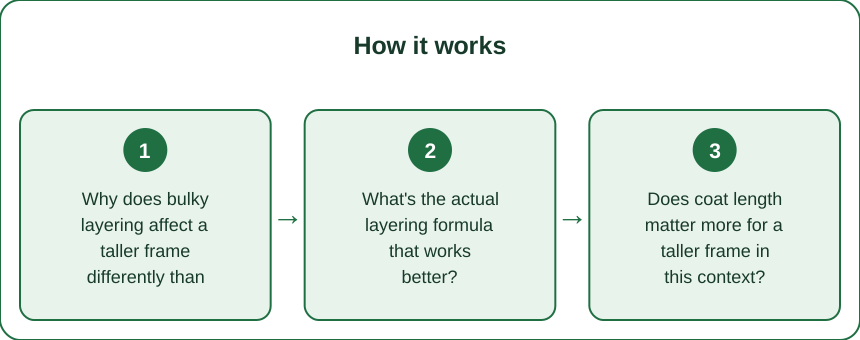
Why does bulky layering affect a taller frame differently than an average-height frame?
Multiple thick layers add visible width in a way that’s proportionally more noticeable on a longer torso and limbs, since there’s more visual length for the bulk to interrupt. Excess bulk around the waist or hips specifically can visually shorten leg-line proportions, which matters more for tall frames trying to maintain a clean silhouette than it does on a shorter frame.
What’s the actual layering formula that works better?
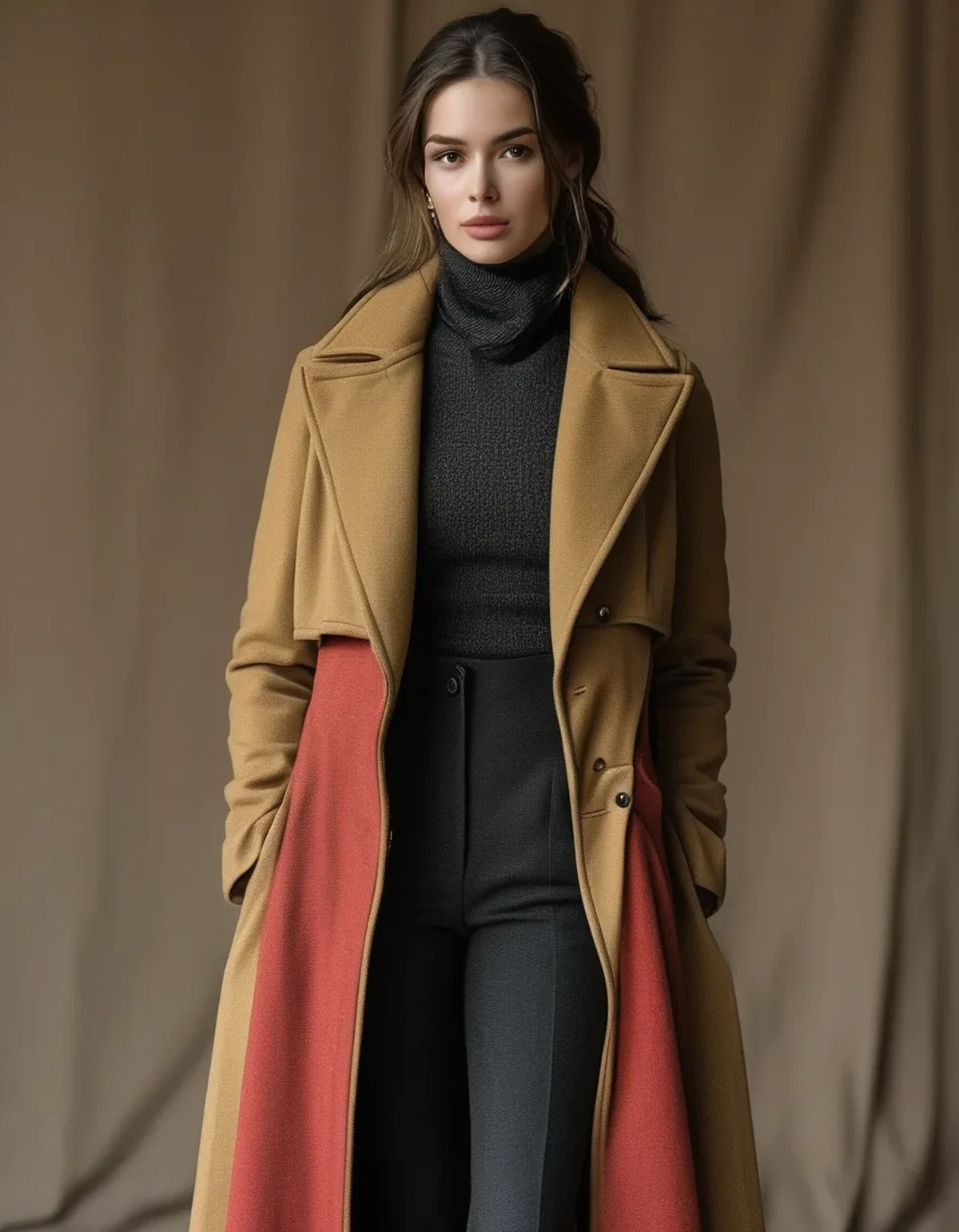
A fitted, thin thermal or technical base layer, one structured mid layer (a fitted sweater or blazer rather than a bulky knit), and a longer, more tailored coat provides real warmth without the visual bulk of stacking three or four looser layers. Fewer, better-insulating layers consistently outperform more, thinner layers for both warmth and silhouette on a taller frame specifically.
Does coat length matter more for a taller frame in this context?
Yes — a coat that’s proportionally too short for a taller frame (hitting at an awkward mid-thigh point rather than at the knee or past it) breaks up the leg line in a way that reads as ill-fitting rather than intentional. A longer coat, cut for the actual torso length rather than a standard length, maintains a cleaner overall proportion specifically on a taller frame.
What Nobody Tells You About Tall Cold-Weather Layering
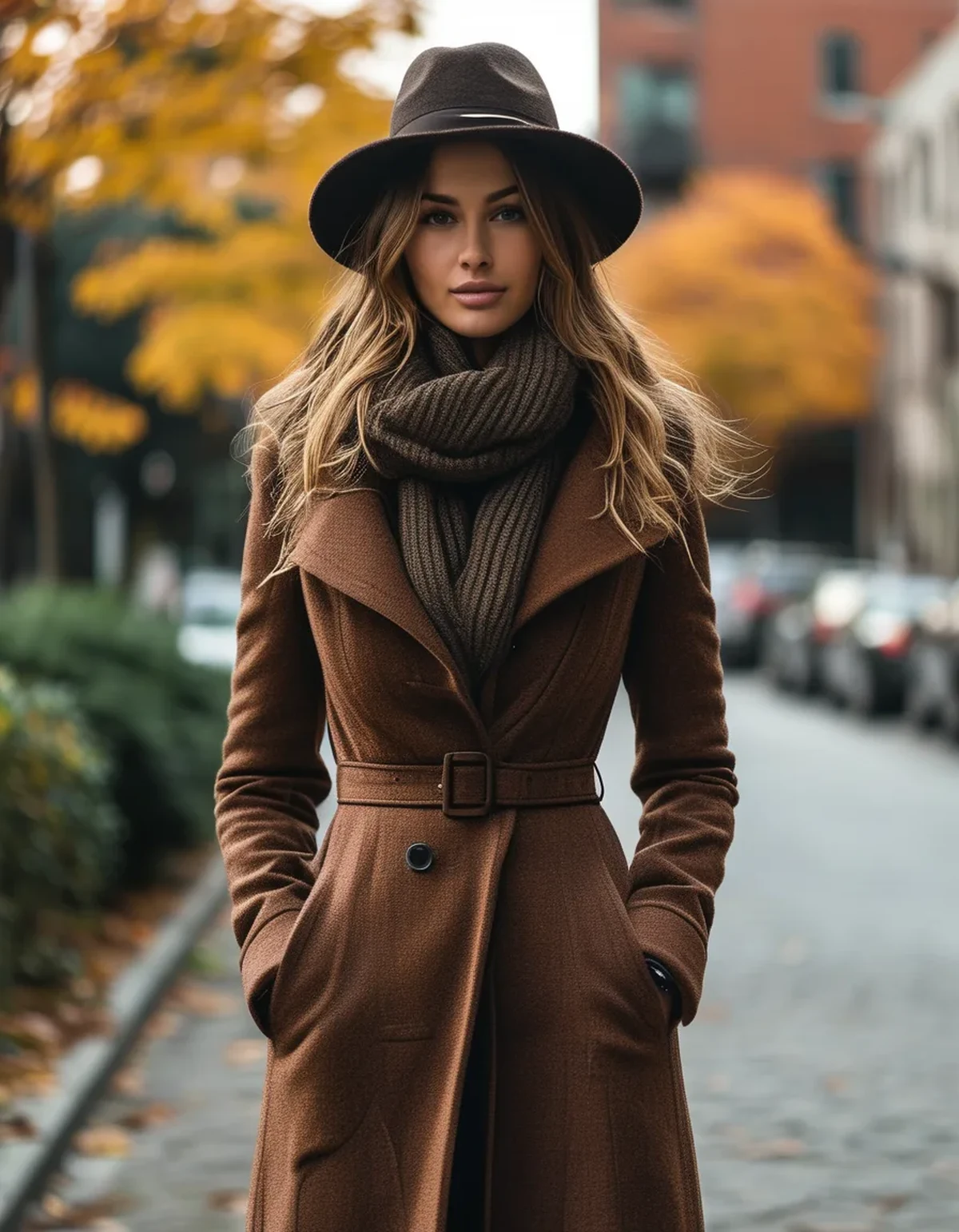
Scarves and accessories carry more proportional weight for a taller frame than shorter frames, since there’s more visual space for them to either complete or disrupt the outfit — a scarf sized appropriately for the frame (not too short or thin) finishes the look better than an average-sized one might. Petite or standard-length outerwear, even in the correct chest size, is one of the most common bulk-adding mistakes for tall frames — sleeves and torso length that run short force outfit compromises (an extra layer underneath for warmth) that add bulk specifically because the coat itself isn’t doing enough on its own.
Is it worth investing in tall-specific outerwear just for this?
For frequent cold-weather wear, yes — it solves the length and proportion issue at the source rather than compensating with extra layers underneath. Tall-specific or extended-length coat options are more available now than in past years, and the proportion difference is usually worth the search for anyone dressing for cold weather regularly.
FAQ: Tall Cold-Weather Date Night Layering, Answered
Are turtlenecks a good base layer choice for a taller frame?
Yes, especially fitted ones — they add warmth at the neck without bulk and pair well under a structured mid layer or blazer without disrupting the line.
Does this formula still allow for a statement outer layer, or does it have to be minimal?
A structured statement coat works well as the outer layer — the formula is about fewer, well-fitted layers, not necessarily plain ones; a bold coat can still be the fewer-layers approach.
What if I run cold and genuinely need more insulation than three layers provide?
Prioritize higher-insulation technical fabrics in fewer layers over adding more layers — a genuinely warm base layer and a well-insulated coat usually outperform stacking several average layers for both warmth and silhouette.
TL;DR:
- Bulky multi-layer outfits read more visually on a taller frame and can shorten leg-line proportions
- Fewer, better-insulating layers (fitted base, structured mid layer, longer coat) work better than stacking thin ones
- Coat length proportional to torso length matters more for tall frames specifically
- Tall-specific outerwear solves the bulk problem at the source rather than requiring extra layers underneath
Staying warm for a cold-weather date doesn’t require sacrificing a clean silhouette — it just means layering smarter, not thicker.
Keep Reading
This article is for general informational and styling purposes only. Fit, sizing, and product availability may vary.