The One Detail That Makes a Tall Woman's Casual Outfit Look Unfinished
Quick Answer: A casual date-night look falls apart fast when the pants stop short of the ankle — it reads unfinished no matter how good the top is. Length (up to a genuine 37” inseam) is doing more work than people give it credit for.
You can get the top right, the shoes right, the whole vibe right — and it still reads slightly off if the pants stop two inches above where they should.
Why does a casual date night expose a too-short inseam so fast?
Standard activewear is built around a single inseam — usually 27”–29” — then scaled up or down by width alone. That works fine around 5’5”, but above roughly 5’8” the same inseam sits several inches short. Sizing up doesn’t fix it, because a wider size is still the same length. During a casual date night, that gap becomes impossible to ignore.
What actually fixes a too-short inseam?
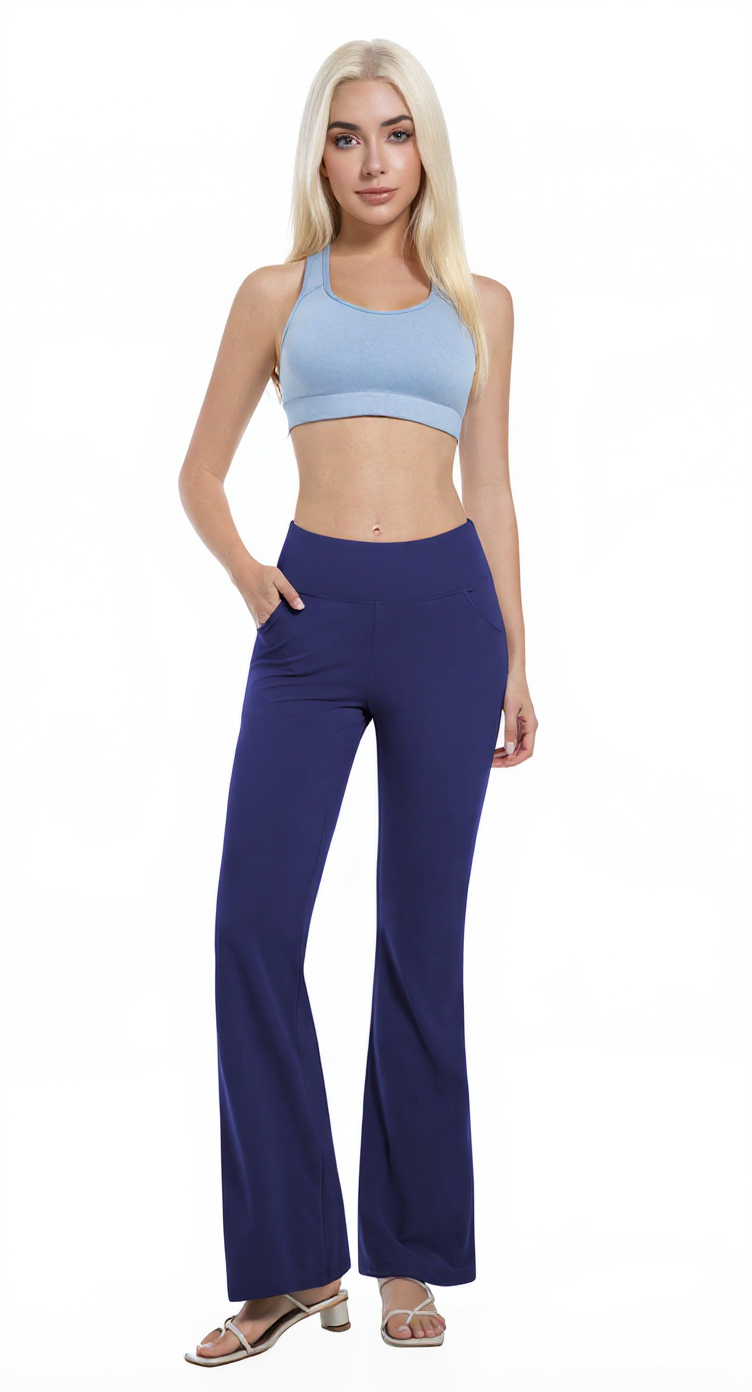
The fix is finding a style genuinely cut in multiple inseam lengths — not just multiple widths. A bootcut style like the Bootcut Yoga Pants comes in lengths from 29” up to 37” in one line, which is the difference between fabric stopping at your ankle and stopping four inches above it.
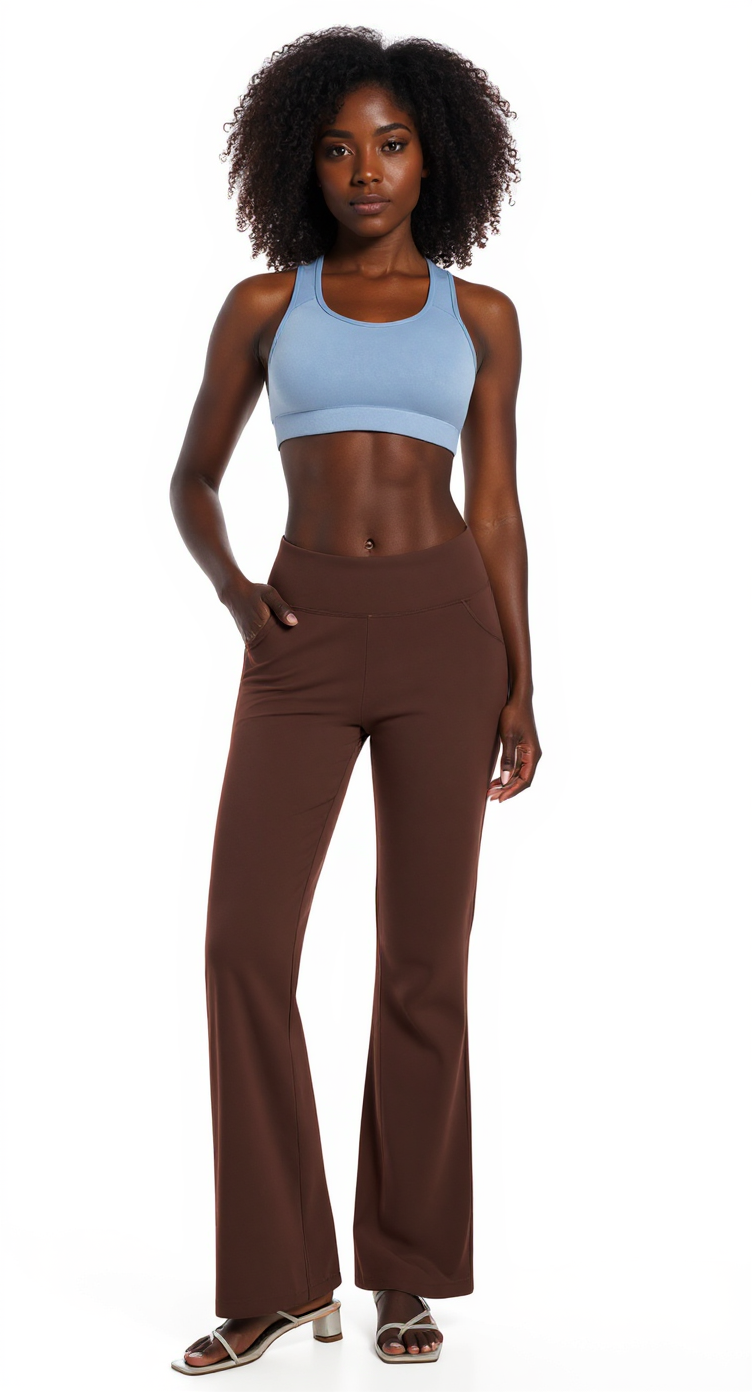
Does the flared hem matter, or is it just the length?
Both, actually. The flare drapes over a shoe instead of stopping at the ankle bone, which reads as more finished, and it gives a little extra room at the bottom of the leg for hours of sitting or bending — no fabric pulling tight across the shin.
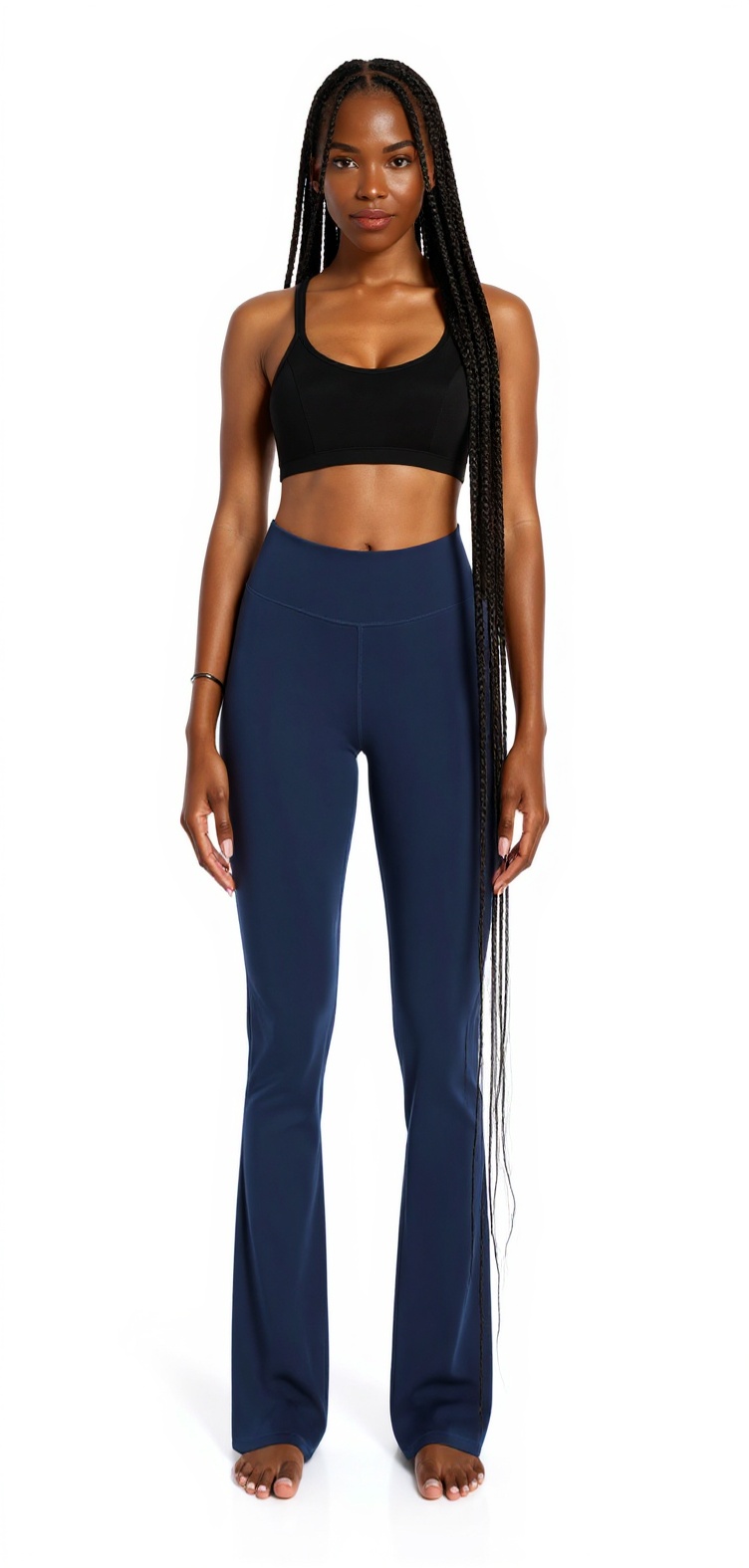
In practice, this shows up as a small daily tax nobody accounts for: buying a pair that fits everywhere except length, then either living with it or hunting for a tailor to add length back in (which, notably, is much harder than shortening something). It’s a solvable problem, but only once you stop treating ‘close enough’ as the ceiling for what fit can be.
What Nobody Tells You About This
Sizing up doesn’t fix a length or fit problem — it just changes the width. The two variables (length, size range) need to be solved independently; a bigger size in the wrong length or pattern grade is still the wrong fit.
Reviews mentioning multi-hour wear are worth more than first-impression reviews. Fit problems — riding up, digging in, losing shape — usually show up after an hour or more, not in a dressing room try-on.
A brand that solves this well usually says so specifically. Vague marketing language (‘inclusive fit’, ‘flattering for everyone’) is worth less than an actual size chart in inches or a stated inseam range.
How do I figure out which inseam length is right for me?
Measure an existing well-fitting pair — inside seam, crotch to hem — rather than relying on height alone. Two women at the same height can need different inseams depending on leg-to-torso ratio. As a rough start: 5’5”–5’7” often lands around 31”–33”, 5’8”–5’10” around 33”–35”, and 5’11” and up around 35”–37” — but always check against your own measurement.
FAQ: Questions, Answered
Q: Is a bootcut actually more comfortable than a straight-leg for a casual date night? For most taller frames, yes — the wider hem means less fabric tension across the shin during a casual date night, and it doesn’t ride up the way a fitted straight leg can.
Q: Do inseam length and waist size get chosen separately? Yes, in a genuine multi-inseam line — you pick your waist size and your inseam length independently, so you’re not stuck choosing one over the other.
Q: Will a 35” or 37” inseam just get hemmed if it’s slightly long? Usually, yes, and it’s a far easier fix than trying to lengthen something too short — better to size up in length and hem down than the reverse.
Q: What if my inseam falls between two of the listed lengths? Go with the longer option — a slightly long hem can be tailored down easily, while a short one has no real fix short of a full fabric extension, which most tailors won’t do well.
TL;DR:
- Standard inseams (27”–29”) sit short above 5’8” — sizing up adds width, not length
- A genuine multi-inseam line (29”–37”) fixes this because the pattern is built for it, not just relabeled
- Measure an existing well-fitting pair rather than guessing off height alone
- Ordering two lengths to compare is a normal first step, not excessive
Whatever the specific fit challenge, the right piece solves it by design, not by compromise.
Keep Reading
This article is for general informational and styling purposes only. Fit, sizing, and product availability may vary.