Why Bar Seating Exposes a Hem That Worked Perfectly Standing Up
Quick Answer: A bar stool puts your thighs closer to horizontal-and-elevated rather than flat, which slides fabric upward and shortens any hem substantially more than a normal chair does. Longer thighs move more fabric for the same angle, so the effect scales with leg length. Check hems on a high seat, not a dining chair. A hem that clears your knee standing needs several inches of margin to survive a bar stool.
The dining chair test passed.
The bar stool was never in the test.
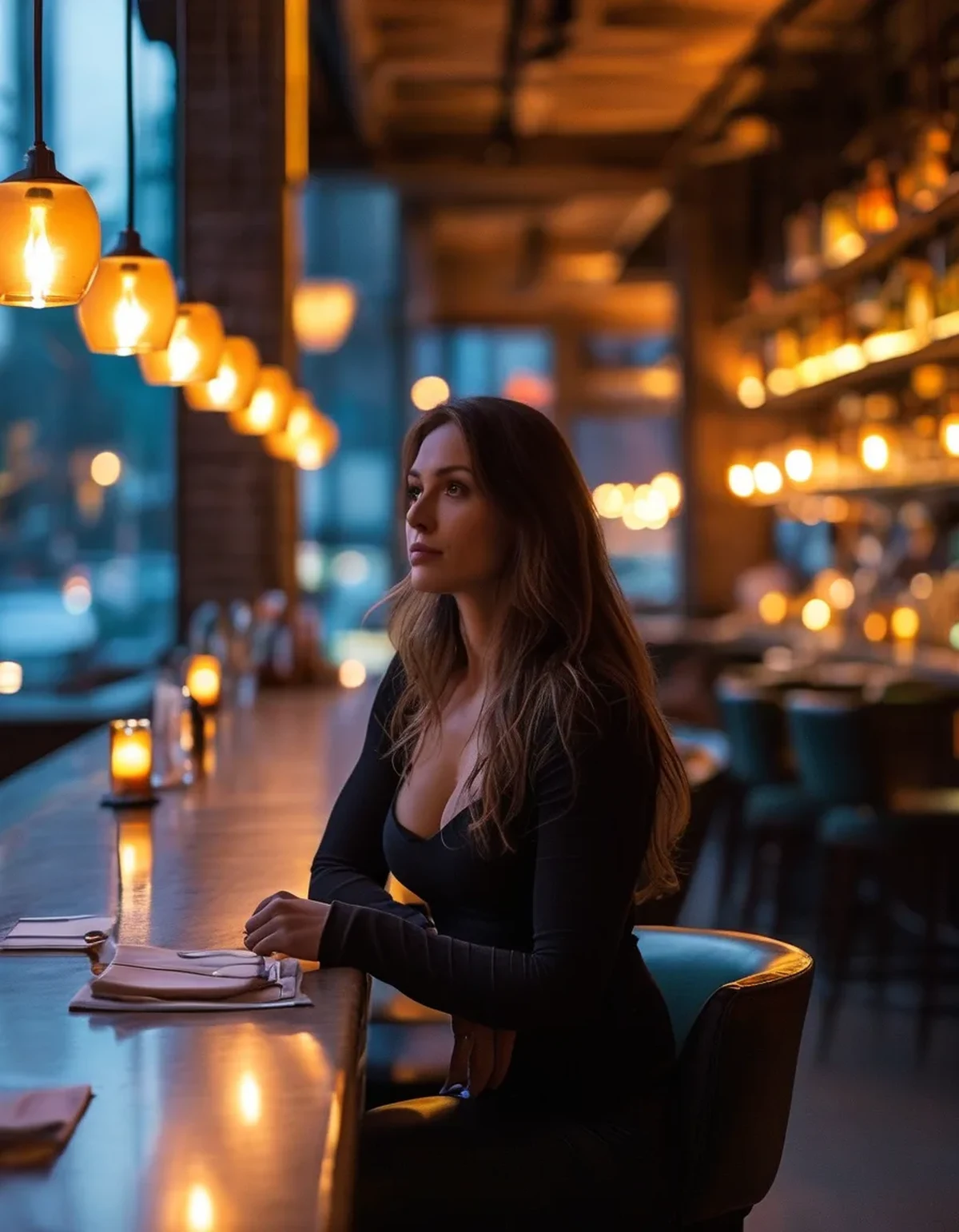
Why does a high seat move a hem so much more?
Because of what the thigh does, and how much fabric it drags with it.
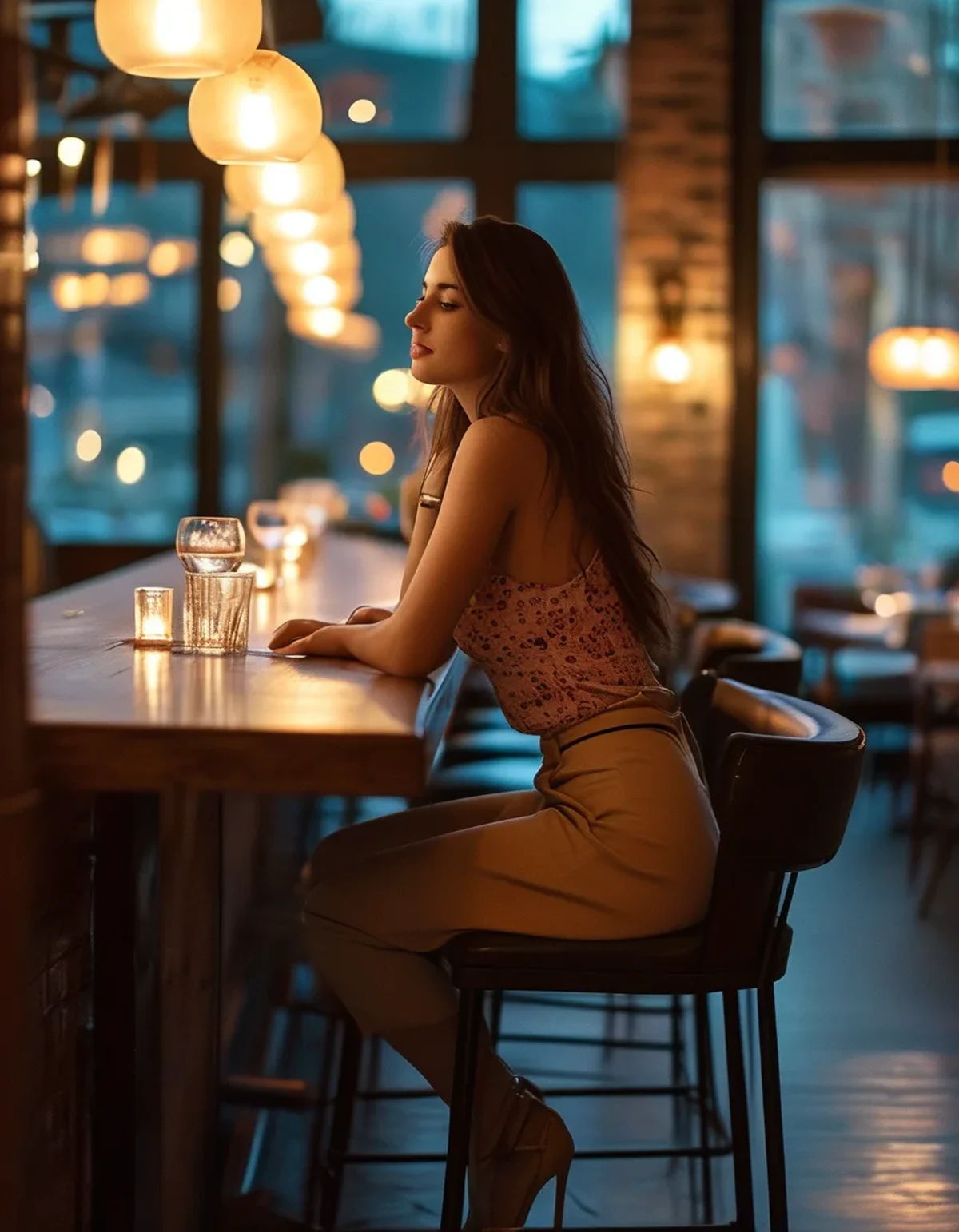
A normal chair supports your thigh along its length. Fabric sits on the seat and stays roughly where it was. A bar stool supports only the back of your thigh near the hip, leaving the rest unsupported and angled downward.
Which slides fabric toward your hip. Anything draped over an unsupported thigh migrates upward under gravity and movement. The hem climbs without you doing anything.
Longer thighs drag more fabric. The same angle across a longer segment moves fabric further. This is why the effect is dramatically bigger for tall women and why shorter friends genuinely do not experience the same thing.
Getting on and off is worse than sitting. The step up onto a stool involves a high knee lift, which is the single largest hem displacement of the evening. The mount is where the problem actually happens, and then the hem stays where it landed.
And you cannot fix it discreetly on a stool. On a normal chair you can smooth a skirt as you sit. On a stool, with your legs visible from all sides and nothing to hide behind, the adjustment is as visible as the problem.
Restaurants have quietly moved to high seating. Communal tables, bar seating, and stools are now the default in a lot of places. The venue type has changed faster than most people’s hem calculations have.
What actually works for high-seat evenings?
Length with margin, fabric that grips, and a couple of structural choices.
Add real margin to the hem. If a hem just clears your knee standing, assume it lands well above mid-thigh on a stool. A midi length is the reliable answer and reads as more considered anyway.
Choose a heavier fabric. Weight resists sliding. A crepe, a ponte, or a heavier woven stays where you put it; a thin jersey or a satin slides constantly. Fabric weight is the most underrated variable here.
Look for a hem with some structure. A slight A-line, a weighted hem, or a lined skirt all resist riding up. An unlined thin skirt is the worst combination because the lining is what usually holds position.
Consider a slit rather than a shorter length. A midi with a slit gives you the movement you need for a stool without the hem migration. This is the specific solution for the tall frame - length for coverage, slit for mobility.
Or wear trousers and put the interest elsewhere. Wide-leg trousers on a bar stool are entirely uneventful. A tall frame carries a wide-leg trouser better than almost anyone, which makes this a genuinely good trade rather than a compromise.
And test at home properly. Sit on a kitchen counter or a high stool, get on and off twice, and look in a full-length mirror. Thirty seconds at home replaces an evening of adjusting.
How do you handle it once you are already out?
Positioning, layering, and one accessory that does the whole job.
Cross at the ankles, not the knees. Crossing at the knee on a high stool lifts the hem further and holds it there. Ankles crossed and both feet on the rail keeps the thighs closer to together and the fabric lower.
Angle your knees together and slightly to one side. This is a genuinely more comfortable position on a stool as well as a more secure one. Both feet on the same rung rather than splayed.
Bring a layer you can drape. A soft jacket, a wrap, or a long cardigan across the lap is unremarkable and completely effective. A jacket over the back of the stool is a wasted resource.
Mount the stool side-on. Approaching from the side and pivoting produces far less hem displacement than a straight-on step up. This one is worth practising once at home because it looks perfectly natural and solves the mount problem.
Choose your seat where you can. A booth or a banquette at the same venue removes the issue entirely. Asking for a table rather than the bar is allowed.
And a slip or shorts underneath removes the anxiety. Not as a fix for a too-short hem, but as a reason to stop monitoring it. The evening improves more from not checking than from any adjustment, which is the actual point of all of this.
5 Mistakes Everyone Makes With Evening Hems
Testing only on a dining chair. The most common one. A dining chair and a bar stool are two completely different geometries, and only one of them is in most restaurants now.
Choosing a slippery fabric for a seated evening. Satin and thin jersey slide continuously and require constant management. Weight and grip beat drape when you are going to be seated on something high.
Buying an unlined skirt for a night out. The lining is what holds a hem in position against tights or bare legs. Unlined plus tights is the slidiest possible combination.
Assuming a tall size fixes it. Tall ranges add inseam length to trousers reliably, and skirt and dress length far less consistently. Check the actual garment length in inches rather than trusting the tall label.
Wearing something you have to monitor. An outfit that needs checking every ten minutes changes how you sit, how you move, and how present you are. Comfort is not the opposite of looking good - it is a precondition for it.
And the bonus mistake: not sitting down before buying. The fitting room has a bench or a chair in it. Use it, and if the shop has none, sit on your heels - anything that flexes the hip tells you more than the mirror does.
FAQ: Tall Evening Outfit Questions, Answered
What length is actually safe for bar seating?
Midi is reliable, and anything above the knee standing should be assumed to be considerably higher seated. The rule of thumb is that a high stool costs you several inches - and more if your legs are long.
Are trousers just the easier answer?
Often, yes. Wide-leg or straight trousers on a bar stool are completely uneventful and a tall frame wears them particularly well. Keeping one reliable trouser outfit for high-seating venues removes the whole question.
Do slip shorts actually help or do they show?
Worn under a midi they never show, and their real value is that you stop thinking about the hem. The confidence effect is bigger than the coverage effect, which is why they are worth having.
TL;DR:
- A bar stool leaves your thigh unsupported, which slides fabric upward - far more than a dining chair does.
- Longer thighs drag more fabric, so the effect scales with leg length.
- The mount is where the hem actually moves - approach side-on and pivot.
- Heavier lined fabrics and a midi with a slit solve it without shortening anything.
- Test at home on a high stool, get on and off twice, and check in a full-length mirror.
Before your next night out, do the stool test at home. Thirty seconds, and it decides whether you spend the evening adjusting.
See It in Motion
Seen here: High Waist Drawstring Wide Leg Yoga Pants with Pockets — shop it on bubblelime.com
Keep Reading
This article is for general informational and styling purposes only. Fit, sizing, and product availability may vary.